
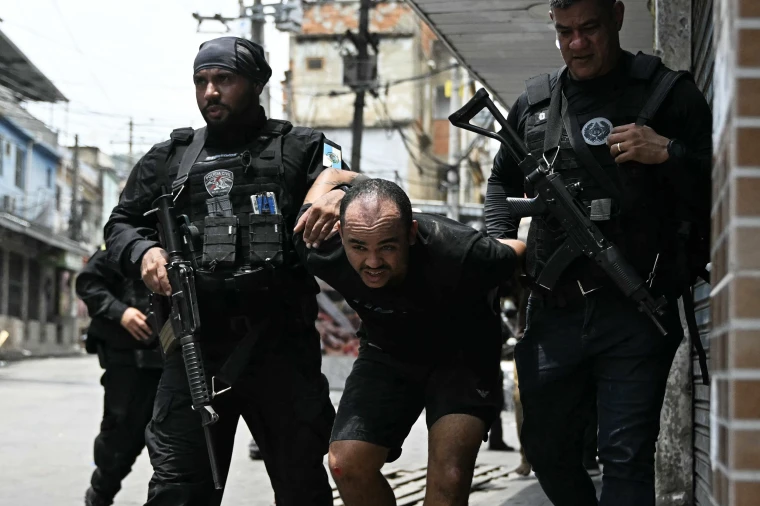
RIO DE JANEIRO, BRAZIL—A massive, pre-dawn police operation targeting one of Brazil’s most powerful criminal organizations has spiraled into an unprecedented bloodbath in the favelas of northern Rio, with the death toll confirmed by the state Public Defender’s office surging to at least 132 people. This staggering number, which includes both suspected gang members and four police officers, makes it the deadliest police action in the country’s history, immediately drawing accusations of a “massacre” from horrified residents and human rights groups.
The Siege on Comando Vermelho
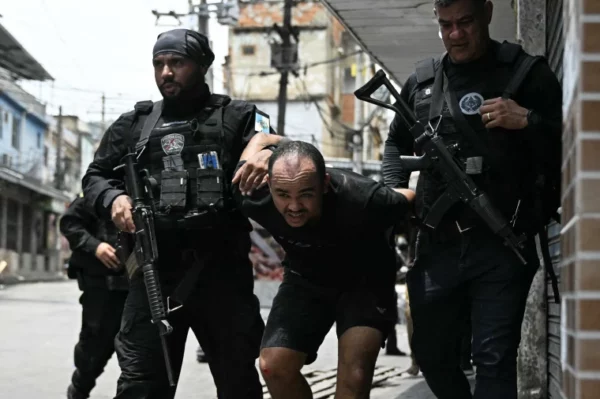
The operation, which began early Tuesday across the sprawling Alemão and Penha favela complexes, was a highly militarized offensive involving approximately 2,500 civil and military police officers, supported by armored vehicles, helicopters, and drones. Officials stated the goal was to “capture criminal leaders” and “counter the territorial expansion” of the Comando Vermelho (Red Command), a notorious drug-trafficking organization.
The raid was met with ferocious resistance. Police reported sustained gun battles and accused the gang of using armed drones to drop explosives, barricading roads with buses, and setting cars on fire, plunging parts of Rio into chaos.
Counting the Dead: A Horrific Morning After
While the initial official count by Rio state police stood at 64 fatalities, the true scale of the violence became apparent as morning broke on Wednesday. Local residents and activists scoured the narrow alleys and surrounding forests, recovering dozens more bodies.
In the Complexo da Penha, a horrifying scene unfolded as residents laid out scores of the deceased—many of them young men—in rows on the ground of a public square, covered with makeshift shrouds. Family members, weeping and shouting calls for “justice” and “massacre,” gathered to identify their loved ones.
“This was a slaughter, not an operation. They came here to kill,” said one distraught woman, echoing the widespread outrage in the community. An activist on the ground reported seeing bodies with shots to the head and back, and others that appeared to have been tied up, fueling claims of extrajudicial executions.
Conflicting Narratives and International Outcry
The sheer scale of the casualties has ignited a fierce political and human rights firestorm.
- Governor Cláudio Castro, a staunch proponent of tough-on-crime policies, defended the operation, calling it “a success” apart from the loss of the four police officers. He characterized the fight against the gang as a necessary war against “narcoterrorism,” a term he has frequently employed.
- The Rio Public Defender’s Office, an independent agency, confirmed the definitive toll of 132 deaths, a figure that significantly surpasses the infamous 1992 Carandiru prison massacre in São Paulo, which claimed 111 lives.
- The UN Office of the High Commissioner for Human Rights expressed it was “horrified” by the extreme lethality and urged for prompt and effective investigations that comply with international human rights standards.
The operation comes just days before Brazil is set to host major international events, including preparatory meetings for the COP30 climate summit, putting the country’s public security strategy—and its long history of deadly police raids in favelas—under a harsh global spotlight. Critics argue that such heavy-handed, militarized operations are an ineffective public security strategy that only leads to mass killings of young men who are quickly replaced in the criminal hierarchy.
The world is watching as calls intensify for an independent probe into what many are calling a turning point in Rio’s brutal drug war—one marked by an unprecedented death toll.