
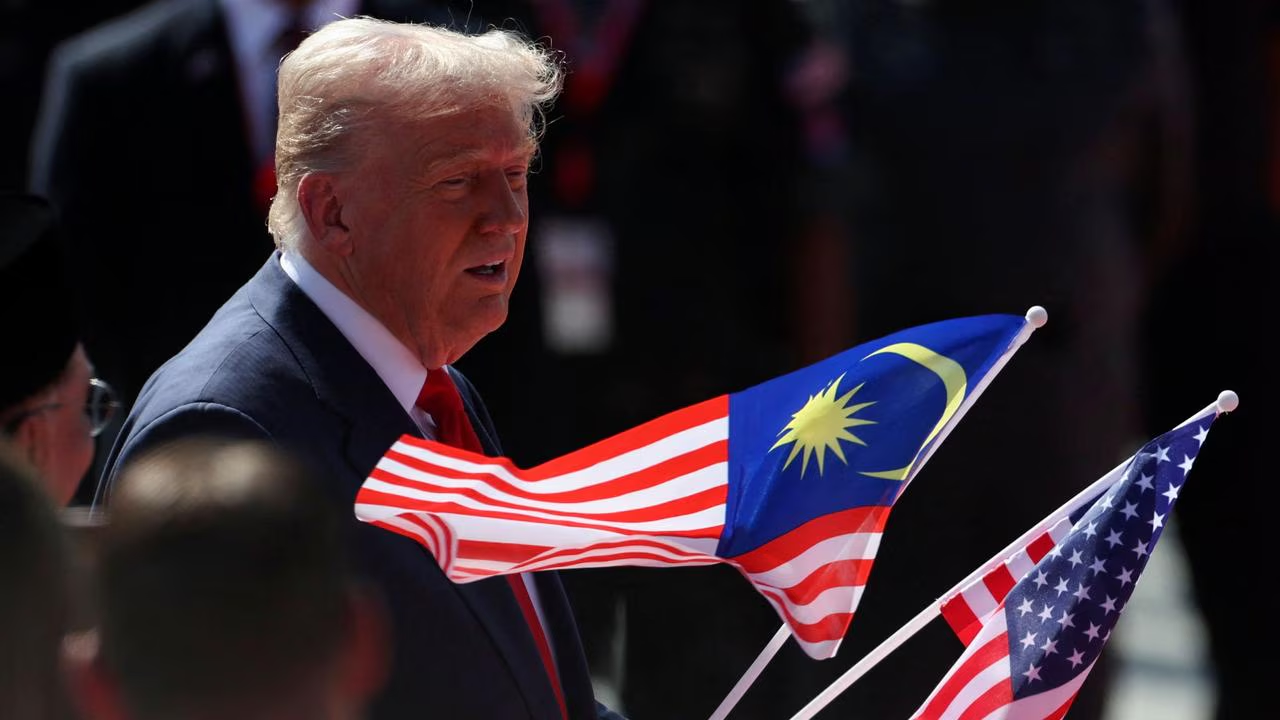
KUALA LUMPUR, Malaysia— US President Donald Trump stood at the center of a major diplomatic event on Sunday, presiding over the signing of an agreement between Thailand and Cambodia intended to resolve a long-running and recently deadly border conflict.
The event, staged on the sidelines of the annual ASEAN summit in Kuala Lumpur, was immediately hailed by the President as the “Kuala Lumpur Peace Accords” and a “historic agreement to end the military conflict,” which he dramatically claimed could save “millions of lives.”
The formal signing of what the countries’ own premiers called a “joint declaration” by Thai Prime Minister Anutin Charnvirakul and Cambodian Prime Minister Hun Manet marks a significant step toward solidifying a fragile ceasefire brokered in part by the White House earlier this year.
Tariffs and Truces: A New Form of Diplomacy
The White House quickly framed the accord as a major diplomatic victory for President Trump, who is keen to reinforce his image as an unparalleled global dealmaker. The President’s involvement in the détente traces back to the deadliest clashes in decades along the disputed 800-kilometre border in July.
Sources close to the negotiations confirmed that President Trump utilized his trademark economic leverage—specifically the threat of imposing or raising tariffs on both nations—to push the two sides toward a lasting truce.
The agreement signed today expands upon the July ceasefire, establishing concrete steps for de-escalation:
- Cessation of Hostilities: Both nations committed to ending all armed confrontation in the disputed area.
- Weapon Withdrawal: An immediate start to the removal of “heavy and destructive weapons and equipment” from the border areas.
- Prisoner Release: Thailand is set to release 18 detained Cambodian soldiers.
- Regional Oversight: ASEAN observers, including from host nation Malaysia, will be deployed to monitor compliance.
In a speech following the signing, President Trump lauded his personal involvement. “We did something that a lot of people said couldn’t be done,” he said. “I’m proud to help settle this conflict and forge a future for the region where proud independent nations can prosper and thrive.”
Peace Tied to Prosperity
The peace declaration was immediately followed by a flurry of economic announcements, underscoring the transactional nature of the US engagement in Southeast Asia. The President announced new trade agreements with both nations, including a “major trade deal” with Cambodia and a “very important” critical minerals agreement with Thailand.
The trade component secures crucial supply chain access for the U.S. and ties economic cooperation directly to the maintenance of peace.
While Thai officials were more cautious in their language, with their Foreign Minister calling the document a “pathway to peace” rather than a final peace deal, the political optics were undeniable. The Cambodian Prime Minister, Hun Manet, went as far as to express his gratitude for the President’s “decisive and steadfast actions,” which he said reaffirmed that “peace is always possible.”
For the Trump administration, the Kuala Lumpur signing ceremony serves as a powerful piece of foreign policy spectacle, allowing the President to contrast this diplomatic win with ongoing global trade friction and domestic political disputes. In the eyes of Washington, a long-simmering Southeast Asian conflict has been traded for peace—and a pair of new commercial arrangements.