
In a dramatic escalation of the U.S. government’s campaign against drug trafficking, the USS Gerald R. Ford, the world’s largest and most advanced aircraft carrier, has been ordered to deploy to the waters off South America. The move, announced by the Pentagon, injects unprecedented military firepower into a region already experiencing an aggressive surge of American naval assets and targeted strikes against suspected narco-vessels.
A Massive Military Buildup
Defense Secretary Pete Hegseth directed the Ford Carrier Strike Group—a nuclear-powered supercarrier carrying its air wing and escorted by multiple destroyers—to move into the U.S. Southern Command (USSOUTHCOM) area of responsibility, which covers the Caribbean Sea and surrounding waters.
The official mandate is clear: to “detect, monitor, and disrupt illicit actors and activities” and to “degrade and dismantle” Transnational Criminal Organizations (TCOs). The Ford, a first-in-class supercarrier, will join an armada of U.S. vessels already assembled in the region, including destroyers, cruisers, and an amphibious ready group carrying thousands of Marines.
This deployment marks a significant shift, moving from traditional Coast Guard-led interdiction efforts to a full-scale military campaign likened by some administration officials to the post-9/11 “war on terror.”
Lethal Strikes and Political Tension
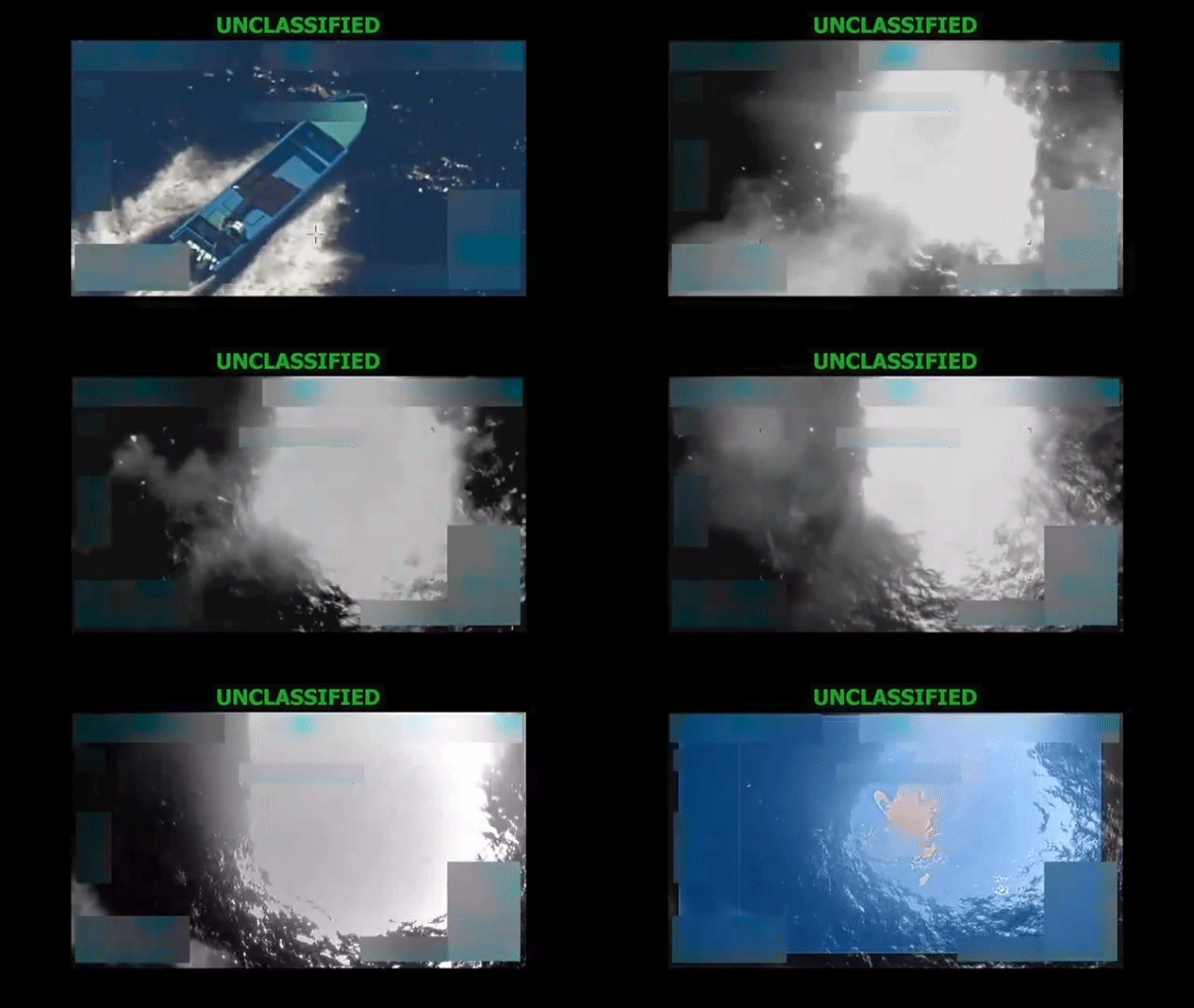
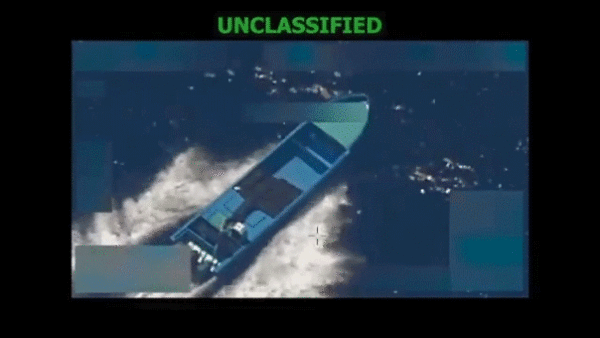
The deployment of the naval behemoth comes amid a recent flurry of lethal U.S. military strikes against suspected drug-smuggling boats in the Caribbean and Eastern Pacific.
- Targeted Attacks: Since the campaign began, U.S. forces have conducted at least ten strikes against alleged narco-boats, resulting in the deaths of more than 40 individuals. The administration has explicitly linked some of these operations to the Tren de Aragua gang, which it has designated a foreign terrorist organization.
- Legal Justification: The administration has sought to justify the use of lethal military force by informing Congress that it considers the cartels to be engaging in an “armed attack against the United States,” effectively labeling drug traffickers as “unlawful combatants.” This legal positioning has drawn immediate scrutiny and criticism from lawmakers and legal experts.
- A “Next Phase”: The deployment suggests an intent to expand the scope of operations beyond maritime interdiction. President Donald Trump recently indicated that the next phase of the campaign would target the drug groups “on the ground,” suggesting potential land-based strikes—a major escalation.
Tensions Mount with Regional Neighbors
The massive concentration of U.S. military hardware has dramatically raised the political temperature in the Western Hemisphere. The deployment is taking place near Venezuela, whose President Nicolás Maduro has been charged by the U.S. with “narcoterrorism.”
Venezuelan officials have denounced the military buildup, claiming it is merely a pretext for intervention or an attempt to destabilize the government. In response to earlier naval presence, the Venezuelan military reportedly flew supersonic fighter jets near a U.S. warship in a provocative show of force.
Analysts note that the presence of the Ford and its fighter jets provides the U.S. with vastly increased air superiority and strike capability, giving the administration options that go far beyond drug interdiction and fueling speculation that the broader objective is to exert maximum pressure on the Venezuelan regime.
The arrival of the world’s largest warship signals that the fight against transnational crime in the Caribbean has entered a new, far more aggressive, and politically charged chapter.