
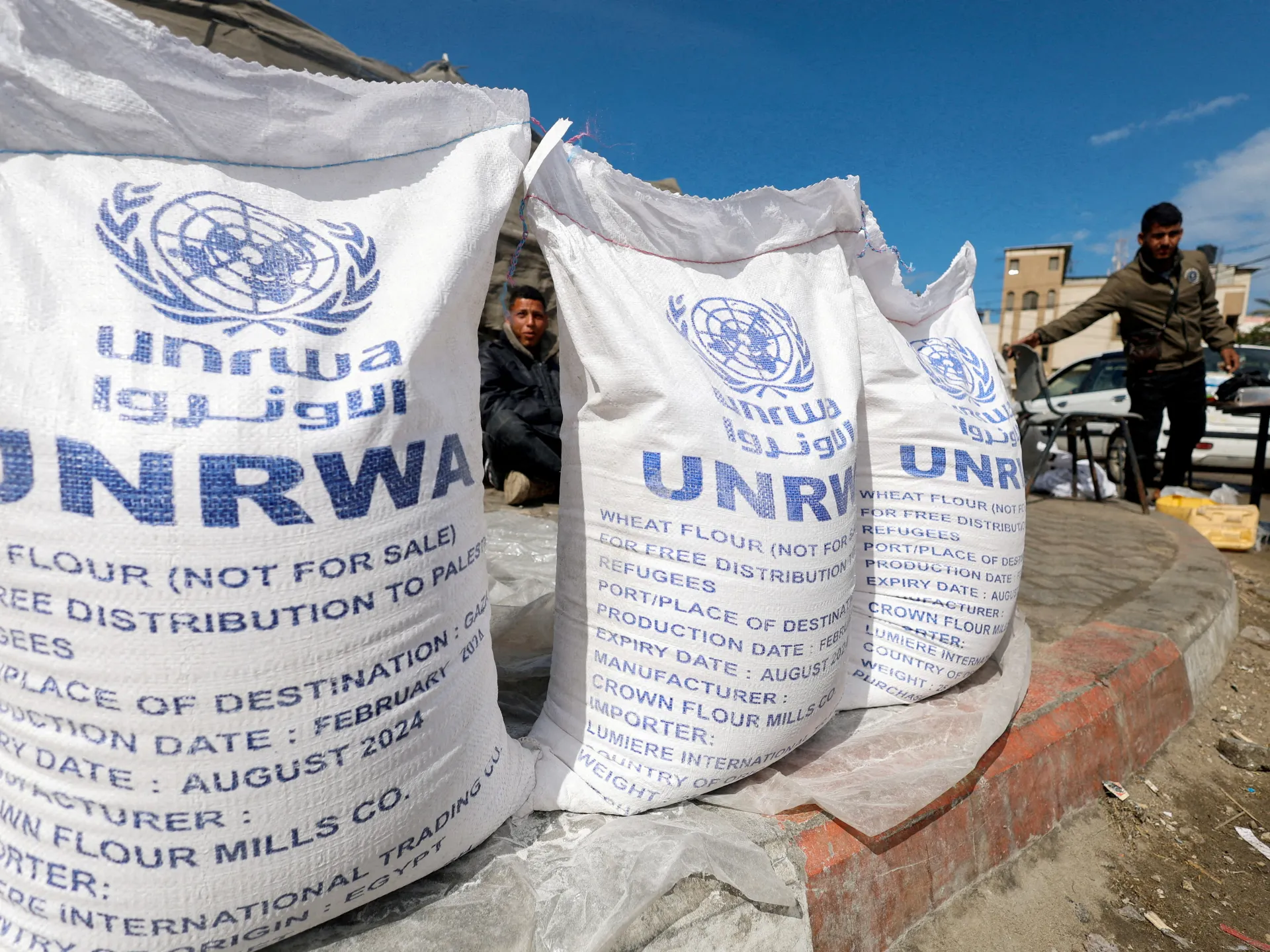
THE HAGUE, Netherlands – In a stinging rebuke of Israel’s policies on humanitarian access to the Gaza Strip, the International Court of Justice (ICJ)—the United Nations’ top legal body—issued an advisory opinion yesterday asserting that Israel is legally obligated to permit and facilitate the delivery of essential aid by the UN and its entities, including the beleaguered UN Palestinian refugee agency, UNRWA.
The ruling, though non-binding, carries immense legal and moral weight, directly challenging Israel’s stringent restrictions on relief efforts during the protracted conflict and amidst a catastrophic humanitarian crisis in the enclave. The Court emphatically stated that Israel, as the occupying power, must ensure the civilian population is provided with “the essential supplies of daily life,” and that the current supply to Gaza is “inadequate.”
UNRWA: ‘Indispensable Provider’
At the heart of the ICJ’s opinion was the status of UNRWA, the principal UN relief agency in Gaza, which Israel’s parliament has attempted to ban, claiming the organization is infiltrated by Hamas militants. The Court, by a vote of 10 to 1, dismissed these claims as “not substantiated,” finding the evidence presented by Israel to be insufficient to justify ending cooperation.
ICJ President Yuji Iwasawa declared that Israel is “under an obligation to agree to and facilitate relief schemes provided by the United Nations and its entities, including UNRWA.” The court deemed UNRWA an “indispensable provider of humanitarian relief in the Gaza Strip” whose capacity “it is not possible to replicate” on short notice.
An Unconditional Obligation
Drawing heavily on international humanitarian law, particularly the Fourth Geneva Convention, the judges determined that the obligation on the occupying power to “agree to and facilitate relief schemes if the local population is inadequately supplied” is “unconditional.” Furthermore, the Court reiterated the prohibition on the use of starvation as a method of warfare, a finding that adds significant gravity to the ongoing debate over the aid blockade.
The opinion was requested by the UN General Assembly late last year after Israel passed laws banning UNRWA’s activities in Israeli-controlled areas, including East Jerusalem, and barring official contact with the agency.
Israel Categorically Rejects Ruling
Israel’s Foreign Ministry swiftly issued a statement “categorically reject[ing]” the court’s findings, calling the advisory opinion “a politicization of International Law.” Jerusalem maintained that it “fully upholds its obligations under international law” but asserted it would not cooperate with an organization it claims is “infested with terror activities.”
The ruling comes at a critical juncture for Gaza’s 2.2 million Palestinians, many of whom face famine-like conditions despite a fragile ceasefire agreed to earlier this month. UN officials have consistently stated that the volume of aid entering Gaza remains far below the necessary level to avert a humanitarian catastrophe.
While the ICJ’s opinion does not carry the direct enforcement mechanism of a binding treaty, its powerful articulation of international law is expected to increase diplomatic and political pressure on Israel from world capitals and international bodies to comply immediately and ensure “unhindered provision of urgently needed supplies essential to the survival” of the Palestinian civilian population.
The decision stands as a clear legal affirmation that humanitarian imperatives must take precedence, irrespective of security concerns or political disagreements over the mandate of UN agencies on the ground. The world is now watching to see whether the ICJ’s powerful declaration will translate into an open and consistent flow of life-saving aid.