
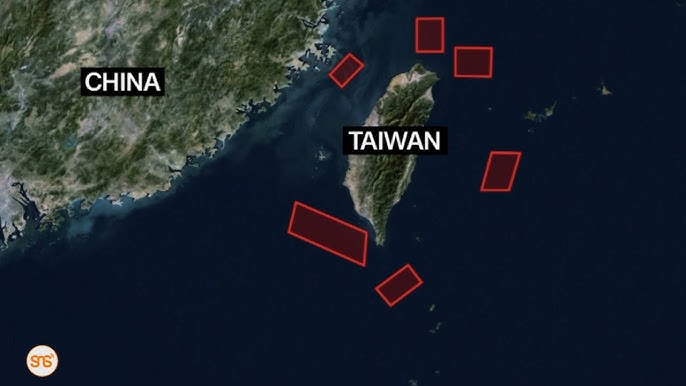
In a dramatic demonstration of its unyielding claim to territorial sovereignty, Chinese customs authorities have seized a massive consignment of 60,000 maps bound for export, citing “problematic” errors that included the mislabeling of Taiwan and the omission of key disputed territories.
The operation, carried out by customs officers in Qingdao, Shandong province, resulted in the confiscation of what authorities classified as items that “endanger national unity, sovereignty, and territorial integrity.” The sheer volume of the seizure underscores Beijing’s intense focus on controlling the global narrative surrounding its borders, extending its political red lines into the realm of commercial cartography.
The “errors” identified by China Customs centered on three crucial areas of contention:
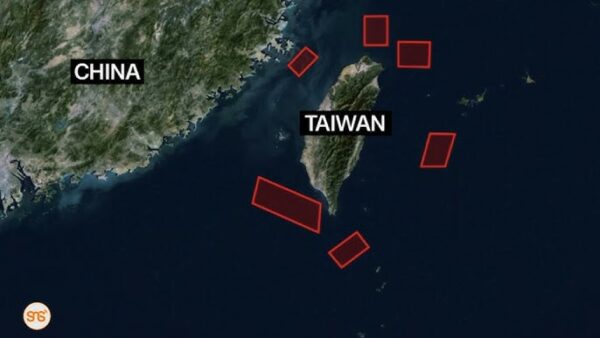
- Taiwan Labelling: The maps allegedly contained “mislabels” of the self-governed island of Taiwan, which Beijing views as a breakaway province. While officials did not specify the exact error, any depiction that suggests Taiwan’s independence or fails to identify it as a “province of China” falls foul of mainland regulations.
- South China Sea Omissions: The maps failed to include the definitive “nine-dash line,” the U-shaped demarcation that defines Beijing’s expansive, and internationally contested, claims over almost the entire South China Sea.
- Disputed Islands: Critical islands in the East China Sea, such as the Diaoyu/Senkaku Islands, which are also claimed by Japan, were either omitted or incorrectly labeled.
The customs statement warned that under Chinese law, such “problematic maps” are prohibited from being imported or exported without prior official vetting by the Ministry of Natural Resources—a vetting process designed to ensure absolute conformity with Beijing’s official territorial footprint.
Escalation of ‘Map Warfare’
While Chinese authorities have a long history of cracking down on cartographic breaches, this latest seizure represents one of the largest single confiscations in recent memory. Previous incidents have seen officials destroy thousands of maps for similar violations, including one instance in 2019 where 29,000 export-bound maps were shredded for depicting Taiwan as a country.
The move comes amid a period of heightened geopolitical friction in the region. Tensions over Taiwan remain at a fever pitch, while recent maritime clashes between Chinese and Philippine vessels in the South China Sea have amplified the volatility of those disputed waters.
For Beijing, a map is far more than a mere geographical tool; it is a political statement and a fundamental document of state power. By enforcing its cartographic mandates on products destined for the international market, China is effectively attempting to normalize its territorial claims globally and force foreign entities to adhere to its “One China Principle.”
Analysts suggest the aggressive enforcement is a calculated component of China’s “grey zone” tactics, which seek to exert political pressure and assert jurisdiction without resorting to overt military conflict. The seizure serves as a stern warning to both domestic manufacturers and international companies: failure to toe Beijing’s line on sovereignty—even on a seemingly mundane product like a map—will result in severe commercial and legal repercussions.
The maps are now expected to be destroyed, transforming 60,000 pieces of paper into a powerful symbol of the unbreakable political link between cartography and sovereignty in one of the world’s most sensitive geopolitical flashpoints.