
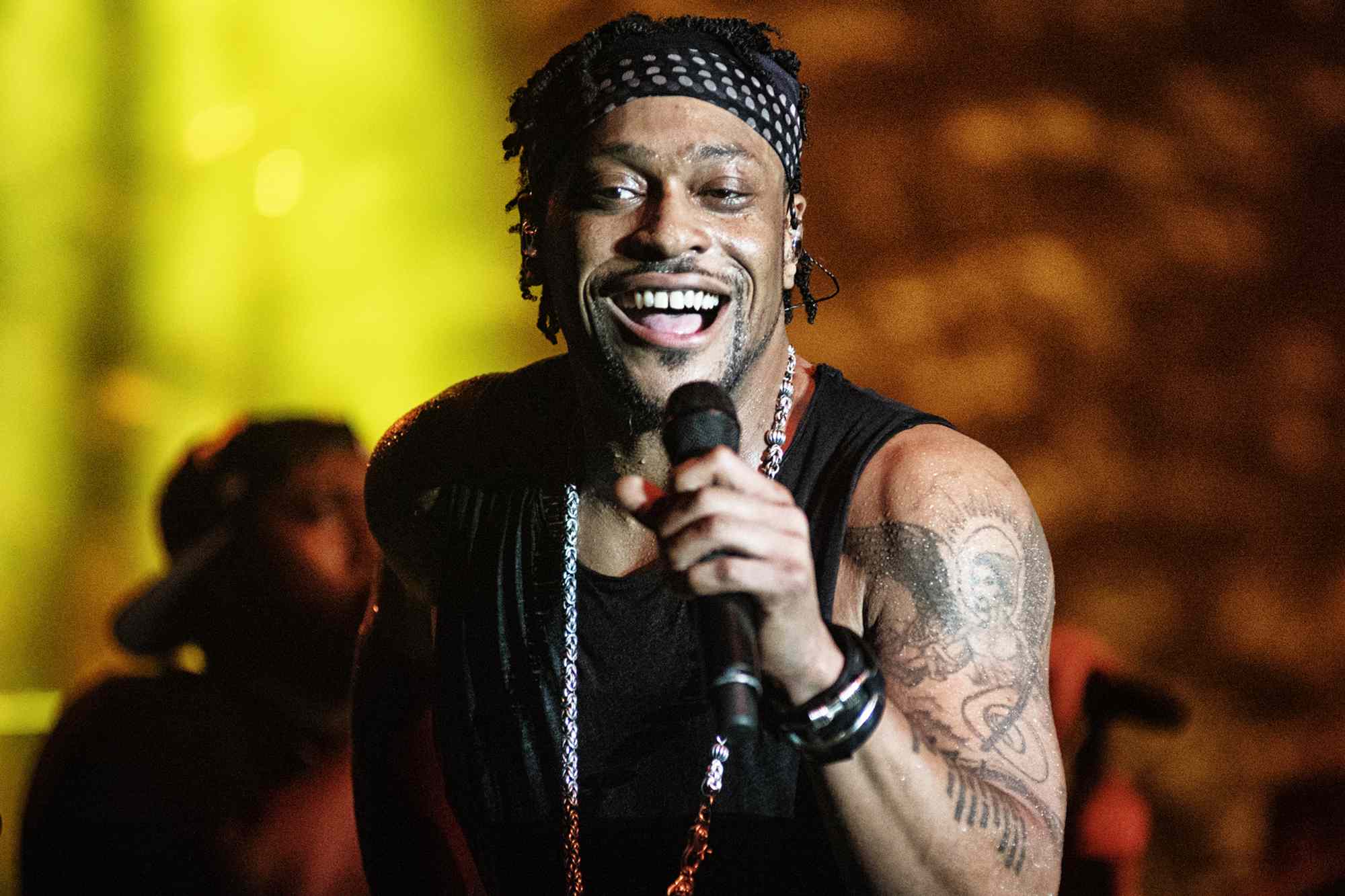
D’Angelo, the Grammy Award-winning singer, multi-instrumentalist, and reclusive genius who defined the sound of neo-soul for a generation, has died after a prolonged battle with cancer. He was 51.
The artist, born Michael Eugene Archer, passed away on Tuesday, his family confirmed in a statement that called him a “shining star of our family [who] has dimmed his light for us in this life.”
D’Angelo’s passing marks the loss of one of the most transformative figures in modern rhythm and blues. He was an artist whose rare, meticulously crafted albums became cultural monoliths, shifting the landscape of popular music and inspiring a legion of successors.
A Holy Trinity of Sound
A son of a Pentecostal minister, D’Angelo began playing piano at age three, his musical roots firmly planted in the gospel traditions of his native Richmond, Virginia. This foundational depth was the wellspring for a sound that effortlessly merged jazz’s complexity, hip-hop’s raw edge, and R&B’s most sensual textures.
His career, defined by extended silences and explosive returns, rests on a holy trinity of albums:
- 1995: Brown Sugar The debut album was a slow-burn masterpiece that immediately ushered in the neo-soul era, stripping R&B back to its soulful, organic core with hits like “Lady” and the title track.
- 2000: Voodoo A seismic cultural event. The album, which won the Grammy for Best R&B Album, was a dense, funky, and often challenging masterpiece. It produced the iconic single, “Untitled (How Does It Feel),” whose minimalist, single-shot music video of a shirtless D’Angelo became a touchstone for discussions on Black male vulnerability and sexuality.
- 2014: Black Messiah After more than a decade of near-total withdrawal, marked by struggles with addiction and the pressures of fame, D’Angelo’s final album arrived with a sense of political urgency. Credited to D’Angelo and The Vanguard, it was a searing, socially conscious record that earned him the 2016 Grammy for Best R&B Album.
A Genius and a Recluse
Despite the acclaim, D’Angelo remained an enigma. His long absences from the public eye only deepened his mystique, turning him from a celebrity into a musical oracle whose every sporadic utterance or performance was treated as an event.
His voice—raspy, fluid, and capable of both a church-infused shout and a smoky, low-key murmur—was a singular instrument. His ability to fuse the work of Prince, Marvin Gaye, and Jimi Hendrix into something entirely new cemented his place not just as a singer, but as a genuine musical architect.
Tributes poured in from across the music world, reflecting the magnitude of his influence:
- Rapper Tyler, the Creator recalled buying Voodoo on his ninth birthday, calling D’Angelo “a savant. A true alien,” who helped shape his “musical DNA.”
- Musician Flea of the Red Hot Chili Peppers praised his unmatched musicianship, noting: “No one did anything funkier over the last 30 years… He changed the course of popular music.”
- Singer Jill Scott, a contemporary of the neo-soul movement, simply wrote: “I never met D’Angelo but I love him, respect him, admire his gift. This loss HURTS!! R.I.P. GENIUS.”
D’Angelo’s final battle with cancer, reportedly pancreatic cancer, was kept private, underscoring the fierce guard he maintained around his personal life. He is survived by his three children. His passing comes just months after the death of his former partner and fellow soul singer, Angie Stone.
The man who once asked, “How does it feel?” in a question that became a cultural challenge, has left behind a body of work that will ensure fans feel the depth of his genius for decades to come. His legacy is not just in the notes he sang, but in the silence he created, forcing the music world to wait for—and revere—his every return.