
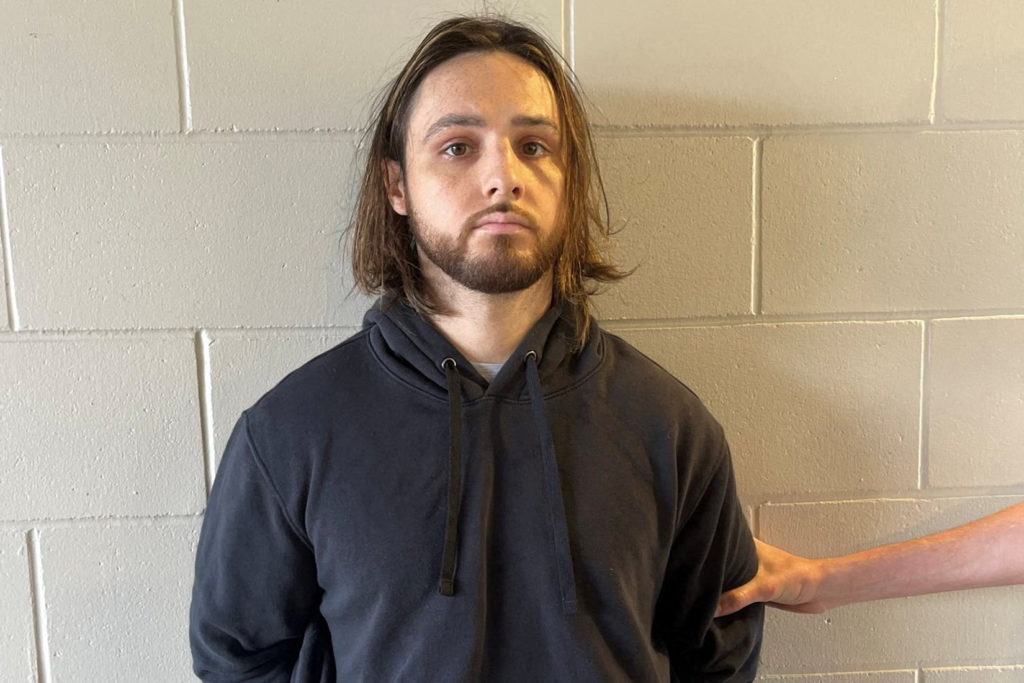
LOS ANGELES, CA — In a chilling convergence of artificial intelligence and criminal investigation, federal authorities have announced the arrest of a suspect in connection with the deadly Pacific Palisades fire, with a pivotal piece of digital evidence reportedly sourced from an AI image generator.
Jonathan Rinderknecht, a 29-year-old former resident of the neighborhood who was working as an Uber driver at the time of the blaze, was arrested in Orlando, Florida, and charged with felony “destruction of property by means of fire.” The devastating fire, which erupted in January, tragically claimed 12 lives and leveled thousands of homes and buildings in the exclusive Los Angeles enclave.
The break in the case came from a meticulous examination of Rinderknecht’s digital footprint, which allegedly revealed a disturbing pattern of preoccupation with destruction by fire. Among the evidence presented by the Acting U.S. Attorney for the Central District of California, Bill Essayli, was a bizarre image generated by Rinderknecht using the AI tool ChatGPT months before the fire began.
The ‘Dystopian’ Prompt
The image, which authorities displayed during a news conference, was the result of a detailed prompt Rinderknecht allegedly fed the AI. It depicted a “dystopian painting showing in part a burning forest and a crowd fleeing from it.”
According to the federal criminal complaint, the full prompt requested an image divided into distinct parts that highlighted “the stark contrast and the direct connection between the different parts of the world,” including a “burning forest” and “a crowd of people running away from the fire.”
While the AI-generated image itself is not proof of a crime, prosecutors argue it provides critical insight into the suspect’s state of mind and a premeditated fixation on the theme of a world consumed by fire. This digital evidence, combined with other traditional and high-tech investigative tools, helped authorities paint a compelling picture of malicious intent.
Geolocation, Lies, and Lighters
The path to the arrest involved more conventional detective work as well.
Rinderknecht is accused of maliciously starting a smaller brush fire—known as the Lachman Fire—on New Year’s Day, which authorities now believe smoldered underground for days before eventually flaring up on January 7 to become the catastrophic Palisades Fire.
Investigators confirmed that Rinderknecht was in the specific area just before the initial New Year’s Day fire. During a January interview with law enforcement, the suspect allegedly lied about his location, claiming he was near the bottom of a hiking trail when he first saw the flames and called 911. However, geolocation data from his iPhone carrier contradicted his statement, placing him a mere 30 feet from the rapidly growing blaze.
Further damaging evidence included a “barbecue-style” lighter found in his car and, according to the complaint, a second, highly suspicious interaction with the AI chatbot: Rinderknecht allegedly asked ChatGPT, “Are you at fault if a fire is lift [sic] because of your cigarettes.” Investigators later ruled out cigarettes as the cause.
The unprecedented use of AI image generation history as evidence marks a significant and cautionary moment in forensic science. As digital tools like ChatGPT become ubiquitous, the line between casual curiosity and a digital confession is becoming alarmingly thin.
Rinderknecht is being held in federal custody pending extradition to California. If convicted, he faces a mandatory minimum sentence of five years and a maximum of 20 years in federal prison. The arrest brings a measure of closure to a community devastated by the tragedy and signals a new era for how law enforcement tracks criminal intent in the digital age.