
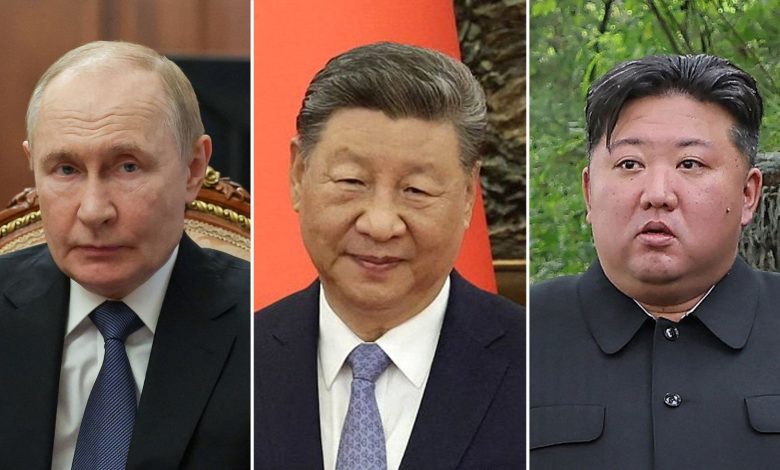
In a powerful and orchestrated show of defiance, Chinese President Xi Jinping is set to host Russian President Vladimir Putin and North Korean leader Kim Jong Un at a massive military parade next week. The rare trilateral appearance, the first of its kind, is a stark and visible signal to Washington that a new, united front is solidifying in Asia, challenging American influence and a global order long dominated by the United States.
The three leaders are slated to appear together at a parade in Beijing to commemorate the 80th anniversary of the end of World War II and China’s resistance against Japanese aggression. While a large number of leaders from the Global South are expected to attend, the presence of Kim and Putin has sent a clear message. As one former CIA analyst put it, their attendance “cements a visible statement about the alignment between the three countries.”
For President Xi, the event is an opportunity to assert China’s leadership on the world stage and demonstrate its power and resolve. The parade is expected to be one of China’s largest in years, showcasing cutting-edge military hardware, including hypersonic missiles and advanced fighter jets. The optics of standing shoulder-to-shoulder with two other powerful, anti-Western leaders projects an image of a new, multipolar world, where China, not the United States, holds the dominant hand.
The meeting also holds significant implications for President Trump’s foreign policy agenda. Since his first term, Trump has favored a more transactional, bilateral approach to diplomacy, cultivating personal relationships with both Putin and Kim. The three-way summit, however, disrupts that model and forces the U.S. to confront a united front, where its adversaries can coordinate their strategies and support one another in the face of international sanctions and pressure.
For North Korea, the meeting is a triumph. Kim has long sought a more central role in global affairs, and his presence on the world stage alongside two of its most powerful leaders gives his regime a new level of legitimacy. It also underscores the importance of North Korea’s military support for Russia’s war in Ukraine, which has provided Moscow with a vital lifeline of ammunition and troops.
While the meeting does not represent a formal military alliance, it is a significant step toward a new geopolitical alignment. For now, the world will watch as the three leaders stand together in Beijing, sending a powerful message that the global order is shifting, and the future may be defined not by a single superpower, but by a new, more defiant axis.