
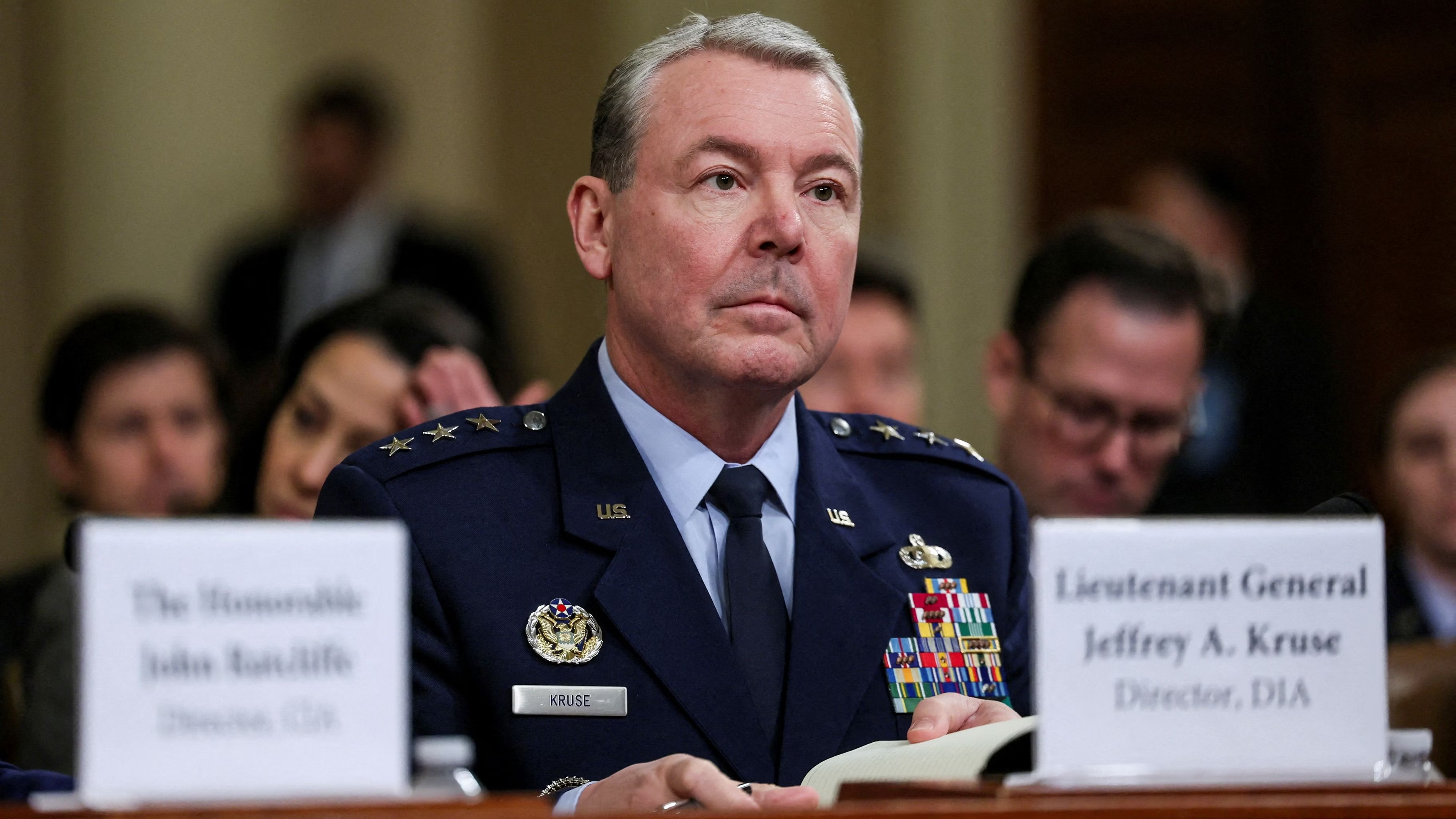
In a move that has sent shockwaves through the U.S. intelligence community, Defense Secretary Pete Hegseth has fired Lieutenant General Jeffrey Kruse, the director of the Defense Intelligence Agency (DIA). While no official reason was given, the dismissal follows a controversy over the DIA’s preliminary assessment of U.S. strikes on Iranian nuclear sites—an assessment that directly contradicted President Donald Trump’s public claim that the sites had been “completely and fully obliterated.”
The firing, which was first reported by The Washington Post and later confirmed by other outlets, is the latest in a series of high-level personnel changes within the Pentagon and intelligence agencies since the Trump administration took office. Lt. Gen. Kruse, who had led the DIA since early 2024, was removed from his post after his agency’s analysis, which was leaked to the media, concluded that the June strikes had only set back Iran’s nuclear program by a few months.
This finding was at odds with President Trump’s triumphant declaration of an “historically successful attack.” The apparent contradiction drew the ire of the White House and led to a public rebuke from Defense Secretary Hegseth, who, in a press conference following the strikes, had lambasted the media for reporting the intelligence assessment and not celebrating the mission’s success.
The dismissal has sparked a fierce backlash from Democratic lawmakers and former intelligence officials. Senator Mark Warner, vice chairman of the Senate Intelligence Committee, warned that the firing was part of a “dangerous habit of treating intelligence as a loyalty test rather than a safeguard for our country.” Warner, who had been informed of the decision but was given no official reason, added that when “expertise is cast aside and intelligence is distorted or silenced, our adversaries gain the upper hand and America is left less safe.”
Kruse’s ouster is the latest in a series of top-level firings and resignations in the military and intelligence community. The shake-up has included the removal of the chairman of the Joint Chiefs of Staff, the head of the National Security Agency, and the Navy’s top officer. The Office of the Director of National Intelligence has also announced plans to significantly reduce its staff and budget, moves that critics say are designed to curb the independence of the intelligence community.
For now, the DIA’s Deputy Director, Christine Bordine, will serve as acting chief until the Senate confirms a new leader. The dramatic dismissal of Lt. Gen. Kruse, a career intelligence officer with decades of service, underscores the rising tension between military intelligence assessments and a White House that demands its own narrative be the dominant one, regardless of the facts.