
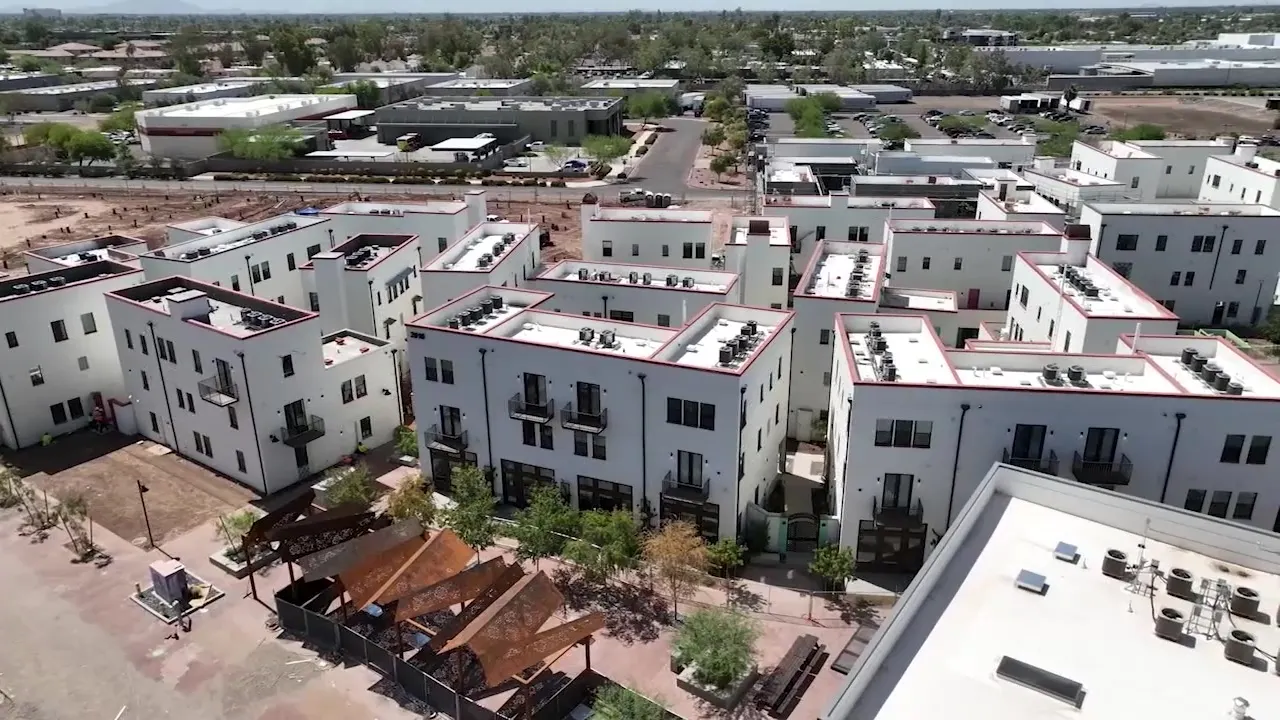
In a city defined by sprawling highways and a relentless dependence on the automobile, a radical experiment in urban living is taking root. Welcome to Culdesac, a new residential development in Tempe, Arizona, that has a simple, revolutionary rule: no cars for residents. The community, the first of its kind to be built from scratch in the United States, is a bold attempt to prove that car-free living is not just a dream, but a viable, profitable reality even in the heart of a car-centric metropolis.
The 17-acre community, located just 2.5 miles from downtown Tempe, is a stark departure from the suburban landscape that surrounds it. Instead of asphalt and garages, it features narrow, meandering walkways, public plazas, and lush courtyards that make up more than 55% of the site. The design, which developers say is inspired by historic Mediterranean villages, creates a microclimate that is an estimated 17-22°C (30-40°F) cooler than the surrounding area’s sun-baked streets, according to a recent Harvard University study.
The ban on cars is not a mere suggestion; it’s a binding part of the lease agreement. In exchange for giving up their vehicles, residents receive an array of mobility perks, including a free annual pass for the adjacent light rail station, discounts on ride-sharing services like Lyft and Waymo, and access to a fleet of on-site e-bikes and scooters. The goal is to provide a comprehensive suite of alternatives that make a car unnecessary for daily life.
The project is a direct response to a growing demand for “missing middle housing,” a term for semi-dense, walkable urban living that is in short supply in most of the U.S. Developers argue that by eliminating the need for parking lots and garages, they are able to dedicate more space to housing, open space, and local businesses. Culdesac Tempe is home to over a dozen retailers, including a coffee shop, a Mexican restaurant, a bike shop, and a local market, all within a five-minute walk.
While the concept has been met with enthusiasm from urban planners and environmentalists, it has also faced skepticism. Critics have questioned whether the model can truly be successful in a city where most jobs and services are only accessible by car. “How do you take a watermelon back from the grocery store on a bike?” one resident joked, though she noted the community’s cargo bikes have helped. Others have pointed out that the development’s location, while adjacent to a light rail, is in a previously industrial area, and many residents will still need to use rideshare or public transit to get to work or visit family.
But for the residents who have embraced the car-free lifestyle, the benefits have been tangible. Some have reported saving hundreds of dollars a month on car-related expenses, while others have enjoyed the physical and mental health benefits of walking and biking more. As one resident told a reporter, it’s a way to reclaim the hours that would otherwise be spent “stuck in the car for those hours and then just getting home and being too tired to do anything.”
The success of Culdesac Tempe is still an open question. But for now, it stands as a daring and hopeful vision for a future that is not built around the automobile, but around people.