
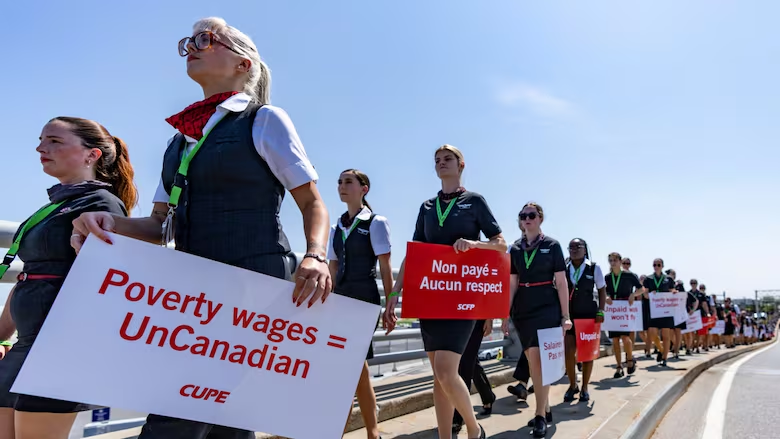
Air Canada’s operations are set to gradually resume after a tentative deal was reached with the Canadian Union of Public Employees (CUPE), ending a four-day strike that had crippled the airline and stranded hundreds of thousands of travelers at the peak of the summer season. The breakthrough came after late-night talks between the two sides and a crucial concession by the airline on a key sticking point: compensation for unpaid ground duties.
The agreement brings to an end a tense and chaotic period for the country’s largest carrier, which was forced to suspend its entire schedule of approximately 700 daily flights after flight attendants walked off the job on Saturday. The strike, which saw the union defy two separate back-to-work orders, was a powerful show of force by the 10,000 flight attendants, and their perseverance appears to have paid off.
“Unpaid work is over. We have reclaimed our voice and our power,” the union said in a statement. “When our rights were taken away, we stood strong, we fought back — and we secured a tentative agreement that our members can vote on.”
While the full details of the agreement have not been released, both the union and the airline have confirmed that a major part of the deal is a new provision for “ground pay.” This was a key demand from the union, which argued that flight attendants were being exploited by being forced to perform crucial safety and boarding duties without compensation.
Air Canada CEO Michael Rousseau said in a statement that the airline’s priority is now to “get them moving as quickly as possible,” but warned that a full return to normal operations could take a week or more. The restart is a complex logistical puzzle, with aircraft and crews out of position after being grounded for days. As a result, some cancellations will continue over the coming days, and the airline has urged passengers to be patient and to check their flight status before heading to the airport.
For the airline, the strike has been a costly and embarrassing affair, with shares losing a significant chunk of their value and the carrier having to pay millions in compensation and refunds. For the union, it is a significant victory that could set a precedent for the entire industry. The deal not only secures a key demand but also sends a clear message that workers’ rights and fair compensation are non-negotiable, even in the face of government intervention.
The tentative agreement will now be put to a vote by the union’s membership. For now, a fragile peace has been restored, and travelers can breathe a sigh of relief as the skies over Canada begin to clear.