
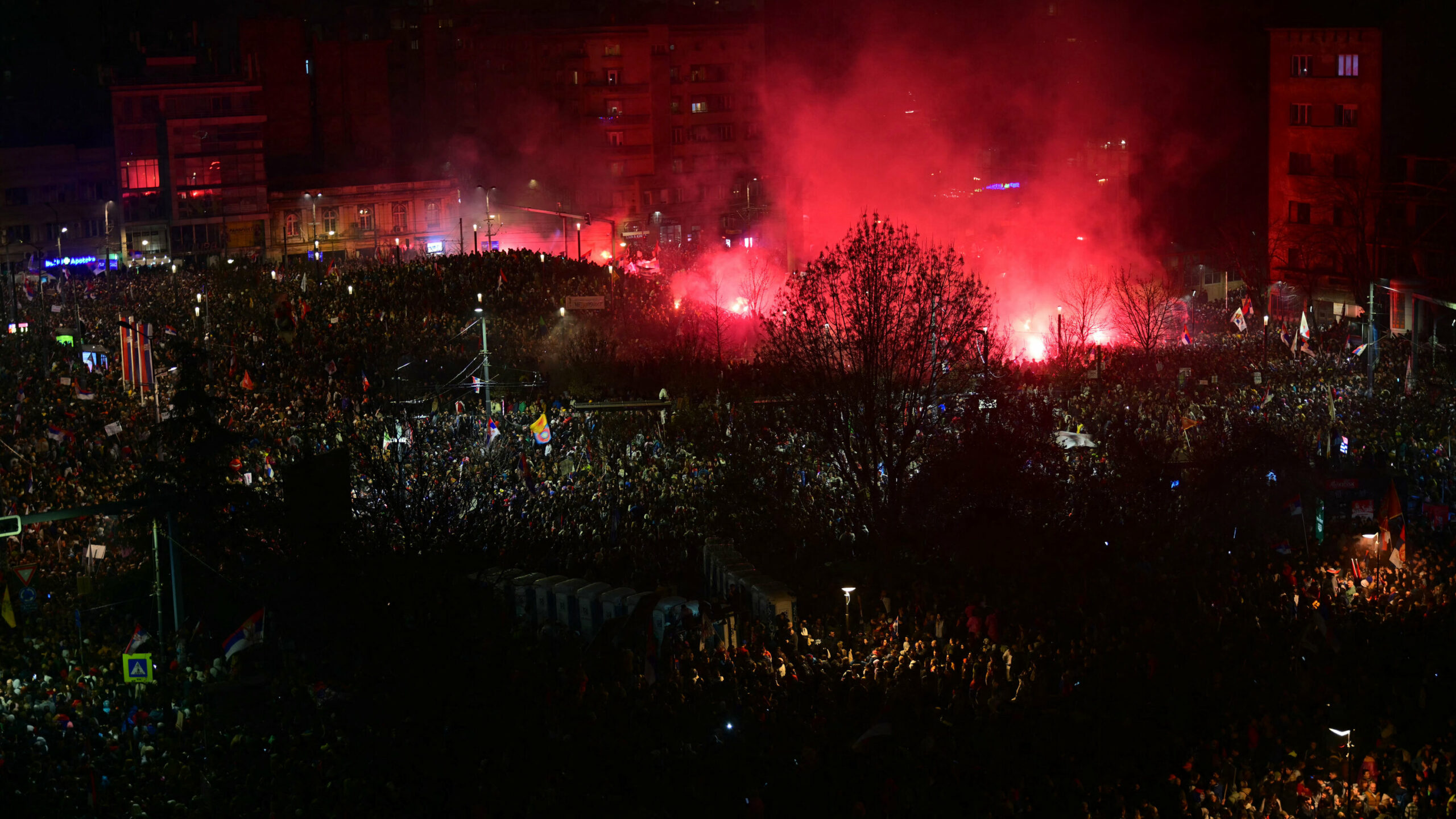
Tensions have reached a boiling point in Serbia as a fire of public anger, fueled by months of anti-government protests, has ignited in cities across the country, with demonstrators clashing with police and setting fire to offices of the ruling Serbian Progressive Party (SNS). The violence marks a dramatic escalation in a movement that began peacefully and has now become a direct challenge to the authority of President Aleksandar Vučić.
The most intense clashes were reported in the western town of Valjevo, where a group of masked protesters threw flares at the SNS office, setting it ablaze before being confronted by riot police. The Valjevo protest, which drew thousands, was sparked by a viral video showing a young man being severely beaten by police during a demonstration earlier in the week, an incident that has become a symbol of what protesters call police brutality.
Similar confrontations also erupted in the capital, Belgrade, and the northern city of Novi Sad. In both cities, police deployed tear gas and riot gear to disperse crowds who responded by throwing bottles, rocks, and setting garbage containers on fire. According to Interior Minister Ivica Dačić, at least one police officer was injured and 18 people were detained in Valjevo alone, with more arrests expected.
The latest wave of unrest is a culmination of a protest movement that began in November, following a train station canopy collapse in Novi Sad that killed 16 people. The tragedy, which many blamed on systemic corruption in state infrastructure projects, became a rallying cry for public discontent. The student-led protests, which have at times drawn hundreds of thousands of people, have demanded an independent investigation into the collapse and early elections to oust President Vučić.
For months, the protests remained largely peaceful, but the dynamic shifted this week as pro-government supporters began staging counter-demonstrations, leading to violent clashes in several cities. President Vučić, who has maintained strong ties with both Russia and China, has accused the protesters of being “foreign-backed” and has vowed a “crackdown on the nationwide movement.”
The Council of Europe’s Commissioner for Human Rights, Michael O’Flaherty, has voiced concern over the situation, urging Serbian authorities to “end arbitrary arrests and de-escalate the situation.” For now, the future of the protests remains uncertain. The violence is a powerful sign that the public’s frustration has reached a breaking point, but it also risks alienating those who have supported the movement’s peaceful aims.