
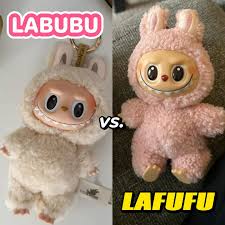
In the global craze for the collectible Labubu toys, a sinister and dangerous black market has emerged, flooding the market with low-quality and often unsafe fakes affectionately dubbed “Lafufus.” With authentic versions selling out in seconds and commanding high prices on the secondary market, the allure of a cheap alternative is strong, but consumer protection agencies are issuing urgent warnings: these counterfeits pose serious health and safety risks.
While some TikTok users have embraced the irony of their “Lafufu” knock-offs, the reality is far from amusing. Trading standards officers are confiscating thousands of these fakes, warning that they can contain toxic chemicals and have small parts that detach easily, creating a severe choking hazard for children. To protect yourself and your family, it’s essential to know the key differences between the real deal and a dangerous counterfeit.
Here is a guide to spotting an authentic Labubu:
1. The Packaging: It’s All in the Details
- Real Labubu: The official Pop Mart packaging has a matte finish and a smooth texture. The colors are typically muted and pastel. The box should also feature a holographic sticker with the Pop Mart logo and a clean, sharp QR code. On the back, the trash can symbol has an arrow with rounded corners.
- Fake Lafufu: Counterfeit boxes are often shiny and glossy, with vibrant or off-tone colors. The logos may be blurry or misspelled, and the QR codes might lead to suspicious or broken links. The trash can symbol on the back often has square corners.
2. The Face and Features: A Flawless Grin vs. a Sloppy Smile
- Real Labubu: The face is a pale, peachy color with a smooth, matte finish. The eyes are glossy and well-defined, and the blush is softly airbrushed. Crucially, a genuine Labubu has exactly nine pointy teeth. Each tooth is distinct, with a clear gap between it and the next.
- Fake Lafufu: Fakes often have faces that are a brighter orange, pink, or yellow with a sloppy, unpolished paint job. The blush may be harsh and circular. The teeth count is a major red flag—Lafufus may have more or fewer than nine teeth, or the teeth might be poorly painted and run together in a blob. The eyes may be flat, lacking gloss and detail.
3. The Materials: From Soft to Scratchy
- Real Labubu: An authentic Labubu plush toy has soft, fluffy, and dense fur with seamless stitching that blends into the vinyl face. The limbs are flexible, and the material has a high-quality feel.
- Fake Lafufu: Fakes often have coarse, cheap, or patchy fur with visible stitching and frayed threads. The parts may feel hard and plasticky, and sometimes the toys even emit a strange chemical smell.
4. The Authenticity Stamp: The Hidden UV Mark
- Real Labubu: Newer models, particularly those released in late 2023 and beyond, include a secret UV-activated stamp on the bottom of the right foot. When you shine a UV or blacklight on it, a silhouette of the specific Labubu design should appear.
- Fake Lafufu: Counterfeits typically lack this stamp entirely, or if they have one, it may be a blurry blob or an incorrect image for that particular figure.
5. The Price: A Bargain Is a Major Warning
- Real Labubu: The price of a genuine Labubu is typically consistent with its rarity and the official retail price. Due to high demand, they often sell out instantly and can be expensive on the secondary market.
- Fake Lafufu: If the price seems “too good to be true,” it almost certainly is. A significantly discounted Labubu from an unverified online seller or market stall is a major red flag for a fake.
The criminal networks behind these “Lafufu” fakes are capitalizing on the viral trend and consumer demand. By bypassing all safety regulations and quality control, they are putting children at risk. The message from consumer watchdogs is clear: the charm of a cheaper alternative is not worth the serious safety risks that these counterfeit toys pose.