
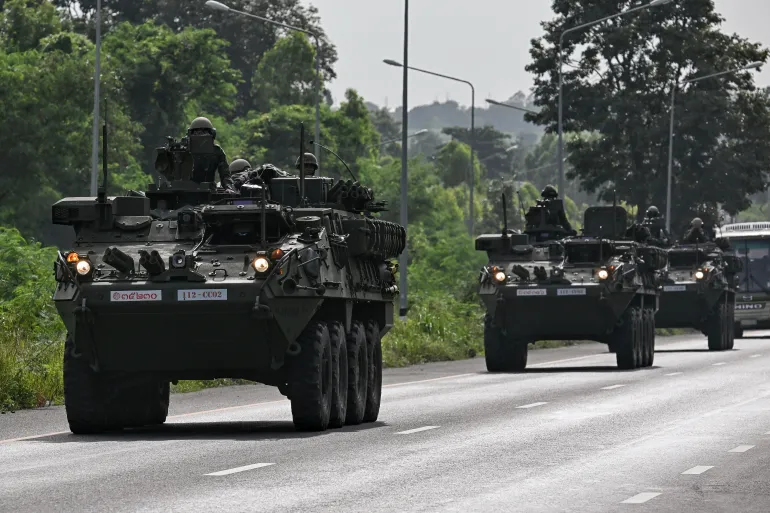
A long-simmering border dispute between Thailand and Cambodia exploded into fierce military clashes on Thursday, leaving at least twelve people dead and dozens wounded. The dramatic escalation, involving artillery shelling and even airstrikes, marks the most serious outbreak of hostilities between the Southeast Asian neighbors in over a decade, sending shockwaves through the region.
Thai officials confirmed the fatalities on their side, stating that eleven civilians, including an eight-year-old boy, and one soldier were killed by artillery shelling from Cambodian forces. The Thai Health Minister, Somsak Thepsuthin, reported 24 civilians and seven military personnel wounded. Casualties were concentrated in Thailand’s Sisaket, Surin, and Ubon Ratchathani provinces, with one Cambodian rocket striking a petrol station, causing significant civilian losses.
In retaliation, the Royal Thai Air Force deployed F-16 fighter jets, launching strikes against what they described as Cambodian military targets. Video footage from the Thai side showed panicked residents, including children and the elderly, fleeing their homes and seeking shelter in concrete bunkers as explosions rocked border communities. At least 40,000 civilians have reportedly been evacuated from villages near the disputed frontier.
While Cambodia has not yet released official figures on its casualties, Phnom Penh has accused Thailand of “unprovoked military aggression” and “reckless and hostile” acts. Cambodian Prime Minister Hun Manet has urgently requested a meeting of the United Nations Security Council, declaring the violence “gravely threatened peace in the region.”
A Century of Contention Erupts
The latest eruption of violence stems from a decades-old territorial dispute, largely centered around the 11th-century Preah Vihear temple, a UNESCO World Heritage site perched on a cliff in the Dângrêk Mountains. While the International Court of Justice (ICJ) awarded the temple to Cambodia in 1962, Thailand continues to claim ownership of the surrounding land, based on differing interpretations of colonial-era maps.
Tensions had been building for weeks, marked by landmine incidents that wounded Thai soldiers and a diplomatic downturn that saw both nations recall ambassadors and expel top diplomats. Earlier this week, Thailand sealed all its land border crossings with Cambodia, and Cambodia responded by banning Thai imports and even cutting cross-border internet links.
Thursday’s full-scale confrontation escalated rapidly. Both sides accuse each other of firing the first shot. The Thai military claims the conflict began when Cambodian soldiers approached a Thai military post with a rocket-propelled grenade. Cambodia’s Defense Ministry, conversely, stated that Thai forces initiated the attack after deploying a drone.
The fighting has now spread to at least six hotspots along the 800-kilometer border, including areas near the ancient Ta Moan Thom temple and the so-called “Emerald Triangle” – a tri-border junction shared by Cambodia, Thailand, and Laos.
Political Undercurrents and Regional Fallout
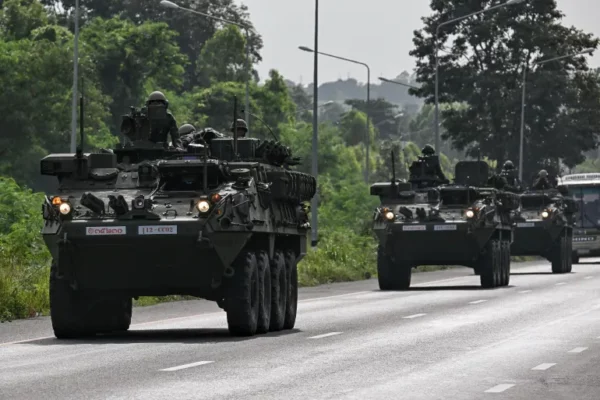
The timing of this conflict is particularly sensitive for Thailand, where acting Prime Minister Phumtham Wechayachai has taken the helm after Prime Minister Paetongtarn Shinawatra was suspended earlier this month amid a political crisis. Some analysts suggest the border dispute is being leveraged by nationalist factions within Thailand, further complicating any de-escalation efforts.
The renewed conflict also poses a significant challenge to the Association of Southeast Asian Nations (ASEAN), of which both Thailand and Cambodia are members. ASEAN prides itself on promoting regional peace and stability, and this open military confrontation between two of its members puts the bloc’s unity and effectiveness to the test. Malaysian Prime Minister Anwar Ibrahim has already confirmed outreach to both Phnom Penh and Bangkok, calling for “peace is the only option.”
As the international community urges restraint and diplomacy, the immediate priority remains the protection of civilians and the cessation of hostilities. But with mutual accusations flying and diplomatic ties severed, the path to peace on the Thailand-Cambodia border appears more precarious than ever.