
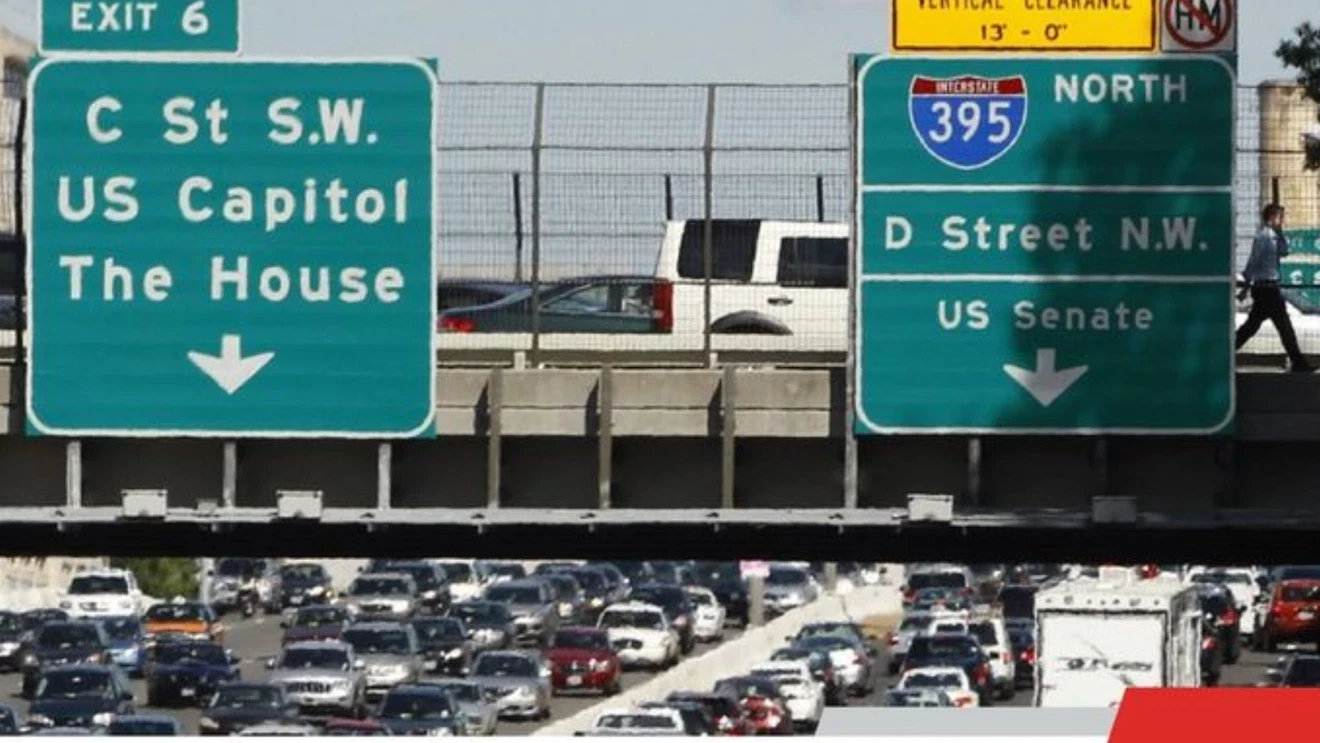
For decades, the mere mention of Los Angeles conjured images of endless freeways, perpetual gridlock, and drivers perpetually stuck in bumper-to-bumper misery. It was an undisputed, if unwanted, badge of honor: the worst traffic in the United States. But in a seismic shift in urban mobility, the City of Angels has finally been dethroned. According to new analyses, Washington D.C. now carries the dubious distinction of being the most congested city for commuters in the U.S.
Recent reports, including those from Consumer Affairs and INRIX’s 2025 Global Traffic Scorecard, reveal that while Los Angeles still suffers from punishing congestion, it has been surpassed by the nation’s capital.
Washington D.C.’s Ascension to Gridlock Glory
The primary metric pushing Washington D.C. to the top of the dreaded list is its average daily commute time. D.C. residents now face the longest average travel time to work in the country, clocking in at approximately 33.4 minutes. This edges out Los Angeles, which now sits at a still-challenging but comparatively lower 30.5 minutes.
Experts attribute D.C.’s surge in congestion largely to recent mandates requiring federal employees to return to their physical offices after years of remote work initiated during the COVID-19 pandemic. With a significant concentration of federal institutions and agencies, this shift has led to a sudden and overwhelming increase in commuter traffic, straining the capital’s existing road infrastructure. While public transportation usage has seen an uptick, it still lags significantly behind pre-pandemic levels, forcing more commuters into private vehicles and exacerbating the problem.
Los Angeles: Still a Congestion Heavyweight, But Not the Champ
Despite relinquishing the top spot, Los Angeles is far from a traffic-free paradise. The city still holds the unenviable record for the longest duration of daily rush-hour periods, averaging nearly eight hours of heavy traffic each weekday. This equates to a staggering 85 full days spent stuck in traffic annually for the average Angeleno.
The city’s sprawling urban landscape, combined with a persistent reliance on car-based commuting, continues to pose significant challenges. While Los Angeles has made substantial investments in expanding its public transportation network, including ambitious rail projects, the sheer scale of the metro area and its population density ensure that traffic remains a formidable foe.
A Broader Picture of U.S. Traffic Woes
The shifting rankings highlight broader trends across American cities. The INRIX 2024 Global Traffic Scorecard (released in early 2025 and covering 2024 data) placed New York City and Chicago in a tie for the most congested cities in the U.S., with drivers in both cities losing an average of 102 hours to traffic jams annually. Los Angeles ranked third in that specific report, with 88 hours lost. These reports indicate that while Los Angeles has lost its top position, the problem of urban congestion remains widespread and impactful across major U.S. metropolitan areas.
For Los Angeles, shedding the title of “worst traffic city” might offer a small psychological victory for its weary drivers. However, the reality remains that navigating the city’s thoroughfares continues to be a time-consuming and frustrating endeavor. The crown may have shifted east, but the battle against gridlock in America’s major urban centers is far from over.