
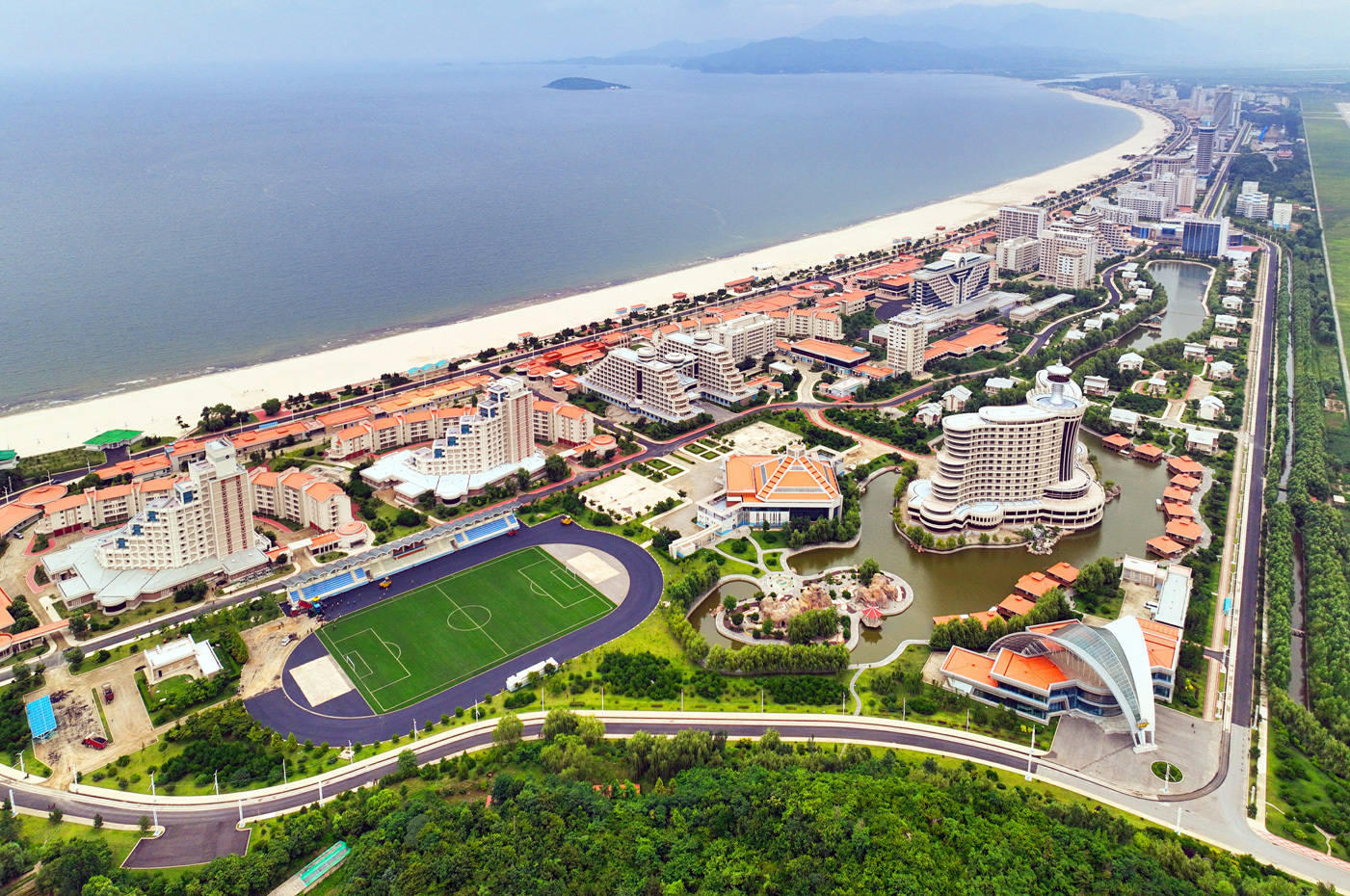
In a surprising pivot from missile launches to sun loungers, North Korea is preparing to officially open its ambitious Wonsan-Kalma coastal tourist zone, a sprawling beach resort project personally championed by leader Kim Jong Un. The move represents a bold, if precarious, bet on tourism as a potential lifeline for the cash-strapped nation, signaling a remarkable shift in economic strategy.
Nestled along the country’s picturesque eastern coastline, the Wonsan-Kalma complex is designed to be North Korea’s answer to a luxury Riviera. Satellite imagery and state media reports reveal a massive development featuring dozens of high-rise hotels and resorts, a sprawling water park, a convention center, a theatre, a sports complex, and a newly renovated airport capable of handling international flights. Construction, initially plagued by delays due to sanctions and resource shortages, appears to have reached completion.
The initiative is a pet project of Kim Jong Un, who has frequently visited the site to oversee its development, often appearing in state media directing construction efforts. His personal involvement underscores the strategic importance placed on tourism as a means to generate much-needed foreign currency, particularly as international sanctions continue to cripple traditional revenue streams.
For years, North Korea’s tourism offerings have been limited to highly controlled tours focused on monuments, historical sites, and the occasional ski resort, primarily attracting niche groups of adventurous travelers. The Wonsan-Kalma zone, however, aims for a broader appeal, suggesting a desire to tap into the regional and potentially even broader international tourism market.
“The Wonsan-Kalma project is more than just a resort; it’s a statement of economic intent,” notes Dr. Park Cheol, a North Korea analyst based in Seoul. “Kim Jong Un is signaling a willingness to explore alternative economic avenues, and tourism, if successful, could provide a valuable, less sanctionable source of income.”
However, the path to becoming a global tourist destination is fraught with immense challenges for the reclusive state. Strict travel restrictions, a pervasive human rights record, and the ever-present threat of geopolitical instability deter most potential visitors. Furthermore, the very sanctions designed to curb the regime’s nuclear ambitions also complicate the import of necessary materials and luxury goods required for high-end tourism.
Despite these hurdles, North Korea appears determined to press ahead. State media has been hyping the resort’s opening, showcasing pristine beaches and modern amenities, clearly aiming to project an image of normalcy and development. The move also aligns with Kim’s broader strategy of Juche (self-reliance), attempting to build domestic industries, even in sectors typically reliant on international engagement.
The opening of Wonsan-Kalma will be closely watched by international observers. While it is unlikely to immediately transform North Korea into a mass tourism destination, it represents a significant gamble by the regime. It will test the country’s ability to attract and cater to foreign visitors, and ultimately, its capacity to adapt its tightly controlled society to the demands of a globalized industry. For now, Kim’s Riviera dream is poised for its grand, if uncertain, debut.